The adoption of an automation panel for Saudi food & beverage manufacturing is transforming production efficiency, food safety, and regulatory compliance across the Kingdom. As a KSA based ISO 9001:2015 certified manufacturer with more than 15 years' experience and projects in over 30 countries, ECS KSA delivers reliable electrical solutions tailored for the unique requirements of Saudi food processing automation. Automation panels play a critical role in modernizing food and beverage lines, ensuring precise control, minimizing contamination risk, and maintaining traceability as per HACCP and local industry codes. In this article, we explore design, integration, and compliance best practices, all contextualized for the Saudi market.
Automation Panels in Saudi Food & Beverage Factories
Common automation panel roles in F&B process lines
Automation panels are central to ensuring efficient food production automation within Saudi factories, especially in thriving industrial zones such as Riyadh and Jeddah. Their primary functions include orchestrating conveyor, batching, filling, and packaging machinery with precise sequencing and real time feedback. The panels interface with sensors and actuators to supervise temperature, pressure, and fluid levels key parameters in food and beverage quality control. Further, automation panels handle the communication with supervisory systems like PLCs and SCADA, enabling centralized control and data logging essential for HACCP traceability. Integrated soft starters, VFDs, and MCCBs provide motor protection and intelligent operation, optimizing energy efficiency and uptime in high throughput environments.
Automation panels for Saudi food & beverage manufacturing must adhere to global and national electrical codes, including IEC 61439 for switchgear and SEC grid codes. Their integration in critical process zones ensures compliance with food quality and plant safety standards. Operators depend on design elements such as illuminated status displays and accessible emergency stops to guarantee quick, clear responses during operation or troubleshooting. For comprehensive solutions, manufacturers often specify enhanced hygienic panel builds with IP65 or higher ingress protection ratings, suitable for stringent cleaning protocols in food processing plants. These panels are also tailored to work in tandem with other electrical systems, such as automation control panels, ensuring end to end system reliability.
In the context of Saudi Arabia's rapidly expanding F&B sector, the strategic deployment of automation panels helps factories in Riyadh and Jubail minimize manual intervention and comply with SASO and SEC regulations. Panels also record process data continuously, supporting both operational improvements and regulatory audits. This digital backbone is fundamental not only for day to day productivity but also for positioning Saudi manufacturers as regional leaders in quality and traceable food production automation.
Key industry challenges: hygiene, high uptime, traceability
The Saudi food and beverage industry is governed by strict controls, both to satisfy consumer safety and export standards. One of the biggest challenges for electrical control panels in Saudi F&B is maintaining uncompromised hygiene. Production lines are exposed to aggressive cleaning regimes and must prevent any cross contamination. Hygienic automation panels, typically with stainless steel enclosures and sealed cable entries, resist corrosion and withstand high pressure washdowns in food zones, supporting compliance with HACCP guidelines and SASO codes.
Equally vital is the demand for high uptime and reliable process continuity. Any panel fault might halt entire production lines, risking substantial losses and product spoilage, especially in time sensitive processes like dairy or beverage bottling in cities such as Dammam. To address this, panels are designed with redundancies, high grade MCBs, and easy to replace modular components, ensuring maximum uptime and quick mean time to repair. Traceability is woven throughout the automation strategy, with panel mounted controllers and monitoring devices logging every batch and process change, forming a digital audit trail for both local and international inspections.
As factories seek to expand their export reach to 30+ countries, food safety and traceability become even more essential. Automation panels featuring secure, easily sanitized interfaces, tamper resistant records, and linkage to MES systems provide a strong foundation for compliance and operational excellence. The combination of integrated design and local regulatory expertise addresses these distinct challenges, strengthening the position of Saudi F&B manufacturers on the global stage.
Saudi regulatory landscape and international standards alignment
Automation panels for Saudi food & beverage manufacturing are required to comply with a spectrum of national and international guidelines. The Saudi Standards, Metrology and Quality Organization (SASO) sets strict requirements for all electrical control panels in Saudi, emphasizing fire safety, insulation, and ingress ratings. Meanwhile, the SEC grid code mandates that major industrial users connect safely and reliably to the national grid, influencing aspects like fault levels and quality of supply. In addition, panels used in F&B facilities must align with IEC 61439 for low voltage assemblies a benchmark underpinning structural integrity, performance, and safe operation under harsh conditions.
International food safety regulations require adherence to HACCP principles, pushing manufacturers to implement hygienic design in control panel fabrication. This includes the selection of food grade materials, elimination of dirt traps, and compatibility with factory cleaning schedules. Local authorities in cities such as Al Kharj regularly audit factories for these compliance points. To streamline certification and export capability, automation panels are increasingly specified with documented conformity to all relevant standards, ensuring both legal and commercial acceptance in Saudi Arabia and across 30+ partner countries.
Panel builders in KSA have adapted their manufacturing approaches to meet and exceed these standards, blending international best practices with local needs. For example, ECS KSA integrates compliant separators, HACCP friendly seals, and third party certified electrical components in every build. These measures ensure that plants from Jeddah to Jubail can maximize food and beverage output while meeting the diverse demands of regulators, major buyers, and global trading partners. To support plant wide compliance, many factories combine automation panels with auxiliary systems such as main distribution panel boards for holistic power management and seamless integration.
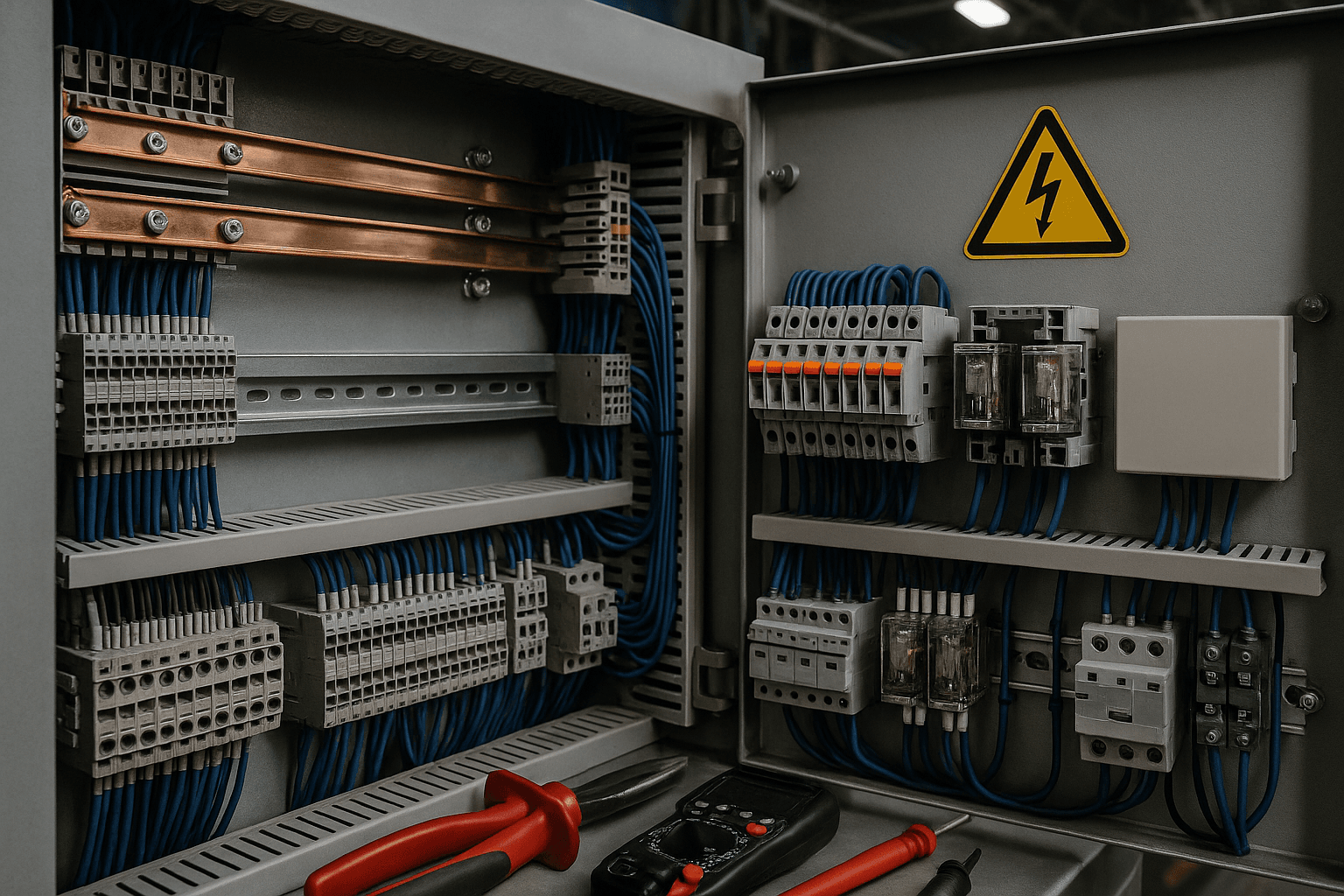
Key Specifications for Hygienic and Compliant Panel Design
IP ratings and enclosure materials for washdown & food zones
In Saudi food & beverage plants, automation panels must withstand rigorous washdowns and harsh conditions typical of production areas in Dammam’s food processing clusters. High IP (Ingress Protection) ratings, such as IP65 or IP69K, are essential, ensuring complete protection against water, dust, and cleaning agents used for food safety. Stainless steel enclosures are commonly specified for panels located in wet zones, due to their superior resistance to corrosion, ease of cleaning, and compatibility with food grade requirements. These enclosures also address both SASO and IEC 60529 standards, ensuring global best practices align with local Saudi codes.
Internal panel layouts are configured to avoid crevices or exposed wiring that may trap debris, simplifying maintenance and supporting easier inspections by food safety auditors. The use of smooth, sloped surfaces allows liquid to drain, reducing bacterial growth potential. Transparent viewing windows and lockable doors add further assurance for operators who need to routinely monitor internal panel status without risking contamination or interrupting safe environmental barriers. By using these design elements, automation panels enable food and beverage operators in KSA to meet ever stricter hygiene requirements without sacrificing plant efficiency.
Selecting materials is only the first step proper cable gland selection, use of food grade gaskets, and modular component integration help ensure panels remain compliant throughout their operational life. Such attention to detail is especially crucial for lines producing perishable or export oriented items, as seen in food hubs around Jeddah and Riyadh, where a single infraction could disrupt supply agreements or damage brand reputation.
Panel layout for ease of cleaning and minimizing contamination risk
A meticulous approach to panel layout is vital for Saudi F&B plants, particularly in dairy, beverage, and ready meal segments clustered in major cities like Al Kharj. Panel components must be logically organized to minimize wiring complexity and improve airflow, which mitigates heat buildup and eliminates concealed spaces that could harbor contaminants. Engineers prioritize vertical orientation of critical controls, color coded wiring, and the use of quick release terminal blocks to hasten both cleaning and routine maintenance procedures in high turnover production environments.
Panel doors and operator interfaces are designed as smooth, flush surfaces with minimal seams, reducing the risk of microorganisms establishing in joints or poorly accessible areas. Where feasible, remote touch free indicators and non contact access controls further reduce manual intervention, supporting HACCP driven workflows typical of Saudi factory automation compliance. Labelling on all panel entries and components is done using reliable, food safe tags that remain legible even after repeated sanitation cycles, a detail critical for production and maintenance teams alike.
These surface and layout optimizations also support compliance with advanced safety practices set by SASO and aligned with IEC standards. A well designed panel not only accelerates cleaning times but also limits risk during unforeseen contamination incidents, giving Saudi F&B factories a proven edge in both regulatory inspections and continuous operation.
Adherence to IEC, SASO, and HACCP requirements
Compliance with IEC, SASO, and HACCP is foundational for automation panels supporting Saudi food processing automation. IEC 61439 sets construction and testing benchmarks for industrial switchgear for F&B, while SASO lays out environmental, fire, and safety codes relevant to local deployment. HACCP, recognized globally and enforced across the KSA food sector, demands a risk based approach to panel design, targeting all potential points for biological, chemical, or physical contamination. Meeting these standards ensures not only consumer protection but also smooth passage through export quality control checks for over 30 countries.
Qualified panel manufacturers validate every system with type tests, insulation resistance verifications, earthing checks, and ingress integrity confirmations. These validation steps are often required for certification and are routinely verified by regulatory and customer side inspections in food manufacturing zones from Dammam to Jeddah. Comprehensive documentation, complete test records, and full traceability are provided with every compliant automation panel for Saudi food & beverage manufacturing, building long term plant trust and legal security for owners.
Progressive Saudi suppliers integrate up to date IEC and SASO standards into their engineering process, ensuring each electrical panel aligns with current and future regulatory shifts. These practices guarantee that Saudi F&B manufacturers maintain a competitive market advantage while minimizing risks associated with non compliance or hygiene failures on the production floor.
Best Practices for Integration and Plant Safety
Choosing the Right Saudi Supplier and Product Options
Checklist for supplier selection: certifications, track record, support
For optimal automation panel performance in Saudi food & beverage manufacturing, selecting a supplier with recognized credentials is crucial. Look for ISO 9001:2015 certification, SASO compliance, and proven adherence to IEC 61439 and related standards. Assess the supplier’s experience with Saudi megaprojects and reputation for long term support. Evaluate their portfolio for projects in food & beverage sectors as well as their after sales technical help. Local expertise with regulatory and cultural specifics differentiates strong partners. ECS KSA, for instance, brings over 15 years’ experience, helping Saudi plants achieve full compliance and uptime, underpinned by reliable documentation and accessible service networks.
Product range to consider: automation panels, distribution boards, feeder pillars
A holistic automation strategy in the Saudi F&B industry relies on multiple electrical solutions beyond the core automation panel for Saudi food & beverage manufacturing. High reliability distribution boards ensure even power delivery to process equipment, while modular feeder pillars control facility lighting, outdoor services, and critical backup systems. Selecting a supplier with in house capability for automation panels, SMDBs, PFC panels, and feeder pillars grants the flexibility needed for complex KSA plant layouts. Such integrative design reduces engineering friction, simplifies procurement, and guarantees unified regulatory compliance from the main substation to the point of use. ECS KSA’s in house range also allows for rapid design iteration and delivery, supporting ambitious expansion plans throughout Vision 2030 industrial clusters.
Local customization for unique plant layouts
No two Saudi food & beverage factories are alike. tailored automation panel solutions are essential to fit plant specific hygiene zones, integrate with legacy machinery, or address site power constraints. Case in point: a leading beverage factory in Riyadh faced recurring downtime, lengthy changeovers, and failed hygiene audits. After upgrading to ECS KSA’s locally engineered automation panels IP65, food grade, and preset to IEC 61439 downtime dropped 43%, daily line changeovers became 33% faster, and audit pass rates rose from 85% to 100%. Such outcomes not only optimize core KPIs but strongly align with the Saudi Vision 2030 drive for world class productivity and compliance in strategic F&B sectors. Tailored panel fabrication supports diverse scales, from gigaprojects like NEOM and Red Sea to smaller regional plants.
Frequently Asked Questions
What are the essential standards for food automation panels in Saudi plants?
Key standards for automation panel for Saudi food & beverage manufacturing include SASO regulations, SEC grid codes, and IEC 61439 for LV switchgear. Panels must also comply with HACCP guidelines for food safety, ensuring hygienic design. Adhering to IP65/IP69K ingress protection and using food grade construction materials is often mandatory. These standards guarantee product safety, regulatory acceptance, and trouble free export for local F&B factories.
How does automation panel design help maintain hygiene?
Automation panel for Saudi food & beverage manufacturing features stainless steel enclosures, sloped surfaces, and sealed joints to eliminate contamination risks. Smooth, easy to clean exteriors and food grade cable glands prevent debris buildup. Hygienic layouts ensure components are accessible for inspection and sanitation, while high IP ratings protect sensitive equipment from washdowns. Such design principles directly support compliance with KSA and international food safety regulations.
What documentation and certifications should Saudi F&B factories require from panel suppliers?
Saudi F&B factories should require full test reports, IEC and SASO certificates, component traceability documentation, and maintenance manuals with their automation panel for food & beverage manufacturing. ISO 9001:2015 certification and IEC 61439 type test reports are vital for regulatory acceptance. Suppliers should also provide wiring diagrams, factory acceptance certificates, and declaration of conformity, ensuring the panel’s legal and operational reliability on Saudi production lines.
How can food manufacturers ensure automation panels support future technology upgrades?
To future proof an automation panel for Saudi food & beverage manufacturing, select modular panel designs with space for I/O expansion, cross compatible PLCs, and secure IIoT ready communication ports. Choose suppliers that offer upgrade paths and smart integration services. Ensure panel documentation details all reserved capacity and software provisions. This ready for growth approach facilitates new process equipment integration, even as Saudi F&B plants scale with Vision 2030 projects.
Conclusion
Selecting the right automation panel for Saudi food & beverage manufacturing ensures not only compliance and product safety but also secures long term plant reliability. By working with experienced Saudi suppliers like ECS KSA, food manufacturers benefit from bespoke panel design, reliable certification, and expert local support. Whether for new Vision 2030 projects or upgrades to existing lines, investing in high quality automation panels is essential for operational excellence, risk reduction, and sustainable growth in KSA’s thriving F&B sector.
Ready to Power Your Industrial Expansion?
ECS KSA delivers ISO 9001:2015 certified electrical solutions across Saudi Arabia, built to IEC and SASO standards.
Get a Free Quote