Introduction to MDB Role in Saudi Airport Expansion
Overview of airport terminal power complexity and growth trends in KSA
MDB sizing for Saudi airport expansion is a pivotal topic as the Kingdom witnesses a surge in passenger traffic and ambitious airport infrastructure projects. Riyadh and Jeddah airports, for instance, are setting new benchmarks for power demand, integrating smart systems, and scaling up capacity to accommodate millions of travelers. The complexity of airport terminal power requirements is rising sharply with the addition of advanced baggage handling, modern security systems, and retail zones. Engineering teams must ensure that the Main Distribution Panel Boards can reliably manage and distribute significant loads, meeting IEC 61439 standards and SASO compliance. The need for futureproofing power distribution to anticipate terminal growth elevates the importance of precise main distribution board calculation and strategic planning.
MDB’s central responsibility in reliable power distribution for terminals
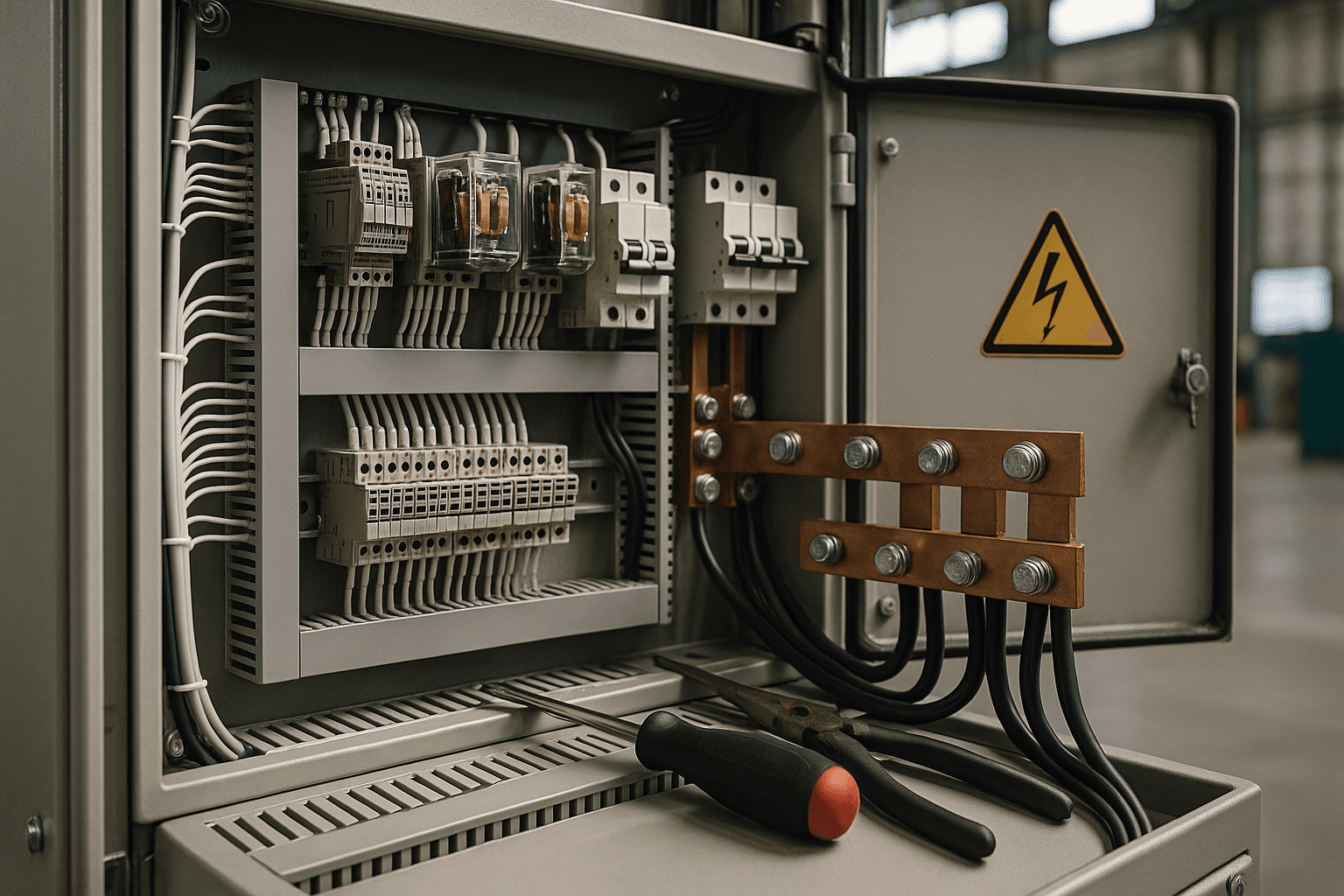
The Main Distribution Board (MDB) stands as the central node in every airport terminal’s electrical backbone, enabling coordinated energy flow to all critical and non essential areas. In Dammam’s rapidly expanding civil aviation sector, for example, MDBs must handle concurrent operations across arrivals, departures, airside logistics, retail, and hospitality. These boards distribute electricity to vital systems such as VFD driven HVAC units, high capacity pumps, MCB protected lighting circuits, and data centers all while maintaining full compliance with SEC grid code. By serving as the first line of protection, MDBs facilitate real time monitoring, rapid isolation of faults, and ensure backup connections through ATS and MTS panels. Integration of advanced busbar technology, such as the solutions offered in our Bus Bar Chambers, secures safe and scalable connectivity, supporting uninterrupted terminal operations.
Critical need for precise sizing in new expansions and upgrades
A precisely sized MDB is the cornerstone of operational reliability and safety for both new Saudi airport expansions and upgrades of legacy terminals. In fast growing hubs like Medina, operational interruptions can translate into significant revenue losses and reputational risks for airlines and airport operators. The challenge lies in accurately planning the main distribution board calculation to account for variable loads, peak usage times, and the integration of new technologies such as baggage automation or biometric security gates. Proper electrical panel sizing guided by ISO 9001:2015 procedures is vital for both safety and performance, ensuring that overcurrent protection, proper discrimination, and adequate short circuit ratings are all verified. Collaboration with the Saudi Civil Aviation Authority from the design stage helps ensure all MDBs in transportation infrastructure earn the necessary safety approvals, supporting both the present and future needs of Saudi aviation.
Calculating MDB Size for Complex Terminal Power Needs
Step by step load assessment for arrivals, departures, baggage, retail, and support zones
Effective mdb sizing for Saudi airport expansion relies on meticulous assessment of all operational zones: arrivals, departures, baggage handling, commercial units, and support systems. Each area contributes unique load profiles, from round the clock HVAC requirements in lounges to high power needs for conveyor belts and security screening systems. The designer begins by cataloguing all fixed and variable equipment, quantifying load per zone, and grouping them into critical and non critical branches. Diverse travel patterns during Hajj in Jeddah, for example, mean load demands can spike seasonally, requiring accurate ratings for the MDB and its feeder circuits. Careful review of each circuit’s demands enables engineers to align MDB capacity with actual airport terminal power requirements and forecasted traffic increases, preventing overloads and service interruptions.
Incorporating diversity factor, continuous and non continuous loads
Accurate main distribution board calculation for Saudi airport projects must account for the diversity factor a critical element reflecting that not all systems will operate at full capacity simultaneously. Typically, continuous loads such as lighting, HVAC, and 24/7 surveillance are calculated at 100%, while non continuous or intermittent loads (like retail point of sale or check in kiosks) are factored in at lower percentages. For a modern Riyadh terminal, the overall calculated MDB size is adjusted by the appropriate diversity and demand ratios, derived from detailed load schedules. Engineers also plan for future increases, ensuring the configuration allows simple upgrades of busbars or switchgear modules. This practice, central to ECS KSA’s 15+ years of international experience in over 30 countries, ensures the MDB remains capable and compliant across the expansion lifecycle, meeting all futureproofing power distribution criteria for aviation.
Sample calculation and common mistakes to avoid
To illustrate, consider a typical airport arrivals hall where total connected loads from HVAC, escalators, lighting, and signage amount to 850 kW. Applying a diversity factor of 0.7, the resulting design load for that zone is 595 kW. The total design load for all zones (including critical security systems and retail) is then aggregated and rounded up to the nearest standard IEC rating, ensuring a safety margin of at least 20%. Common mistakes in electrical panel sizing include underestimating peak usage periods, failing to document all future expansion allowances, and improperly assigning breaker ratings. Misclassification may cause unwanted tripping or inadequate protection. Collaborating with experienced professionals and referencing established standards eliminates oversights, ensuring the MDB provides reliable, safe, and scalable power for high stakes environments like Saudi airport expansions.
Key Standards and Approvals for MDBs in Saudi Airports
IEC and Saudi Building Code requirements for MDBs in transportation infrastructure
In all Saudi airport expansion projects, strict adherence to relevant standards governs every aspect of MDB sizing and installation. The IEC 61439 series is the primary international standard covering LV switchgear and control assemblies, detailing performance criteria for temperature rise, short circuit withstand, and IP ratings typically IP54 or IP65 for dusty or humid airport environments. The Saudi Building Code and SASO guidelines further require reliable construction features, prohibit unauthorized cable modifications, and mandate fail safe earth continuity. These requirements extend through every stage, from design calculations and material selection to final installation and periodic testing. By applying these standards, airports in Mecca and across KSA not only achieve technical compliance but also assure durability and operational safety under challenging climate and load conditions.
Obtaining Saudi Civil Aviation Authority approvals and documentation
Gaining approval from the Saudi Civil Aviation Authority is an essential milestone for any main distribution board serving a new or upgraded terminal. This process begins with detailed documentation: design schematics, short circuit study results, verification of main distribution board calculation, and third party test certificates. Riyadh airport projects, for example, require the compilation of a technical dossier outlining MDB ratings, adherence to IEC standards, SASO registration certificates, and fire safety compliance. The authority conducts rigorous evaluations of submit ted specifications, on site inspections, and operational tests before granting authorization. Comprehensive documentation expedites this process, minimizing delays and ensuring each MDB is safe, reliable, and fully traceable a crucial factor for the ongoing operational security of Saudi aviation infrastructure.
Ensuring compliance with ISO 9001:2015 and local fire/safety regulations
ISO 9001:2015 certification is an assurance of process quality, guiding every ECS KSA project from design to delivery in over 30 countries, including Saudi airports. Implementation of reliable quality management systems ensures that each MDB meets or exceeds all regulatory, safety, and functional requirements. Adherence to local KSA fire and safety codes mandates that every main distribution board includes features such as fire resistant enclosures, verified cable entries, emergency shutdown links, and fault signaling. For airport environments subject to stringent risk management, compliance with these requirements is not optional; it’s critical for safeguarding passengers, staff, and critical data. ECS KSA’s established expertise and deep familiarity with the electrification standards ensure that each installation is a futureproof investment in operational resilience.
Design for Safety, Redundancy, and Future Scalability
Building in redundancy for critical airport operations
Redundancy is a fundamental aspect of mdb sizing saudi airport projects, as the uninterrupted operation of lighting, HVAC, baggage systems, and security networks is non negotiable for safety and passenger satisfaction. At busy Saudi terminals, dual redundant circuits are standard for life safety systems and vital infrastructure. Each MDB is typically configured with separately routed feeders from dual SEC substations, automatic ATS panels for backup supply, and segregated busbars for critical and non critical loads. These layers ensure that if a section experiences a fault or requires maintenance, alternate pathways maintain full operational continuity. Incorporating redundancy not only meets Saudi Civil Aviation Authority and IEC 61439 standards but also safeguards the terminal’s revenue and reputation through minimized service disruptions, especially during peak travel or Hajj.
Planning space and busbar capacity for scalable terminal expansion
Effective mdb sizing for Saudi airport expansion involves forward thinking space allocation and busbar sizing so terminals can evolve with increased passenger traffic or new technologies. Leading projects, such as the King Khalid International Airport expansion under Saudi Vision 2030, require MDBs with oversized copper busbars and room in switchboard enclosures for forthcoming feeders. Design teams must forecast future aviation needs, allowing retrofitting for electric vehicle charging, next generation security scanning, or expanded baggage handling. Adjustability, such as modular PFC or space for new MCBs, is built in from day one. Reporting from ECS KSA’s Riyadh project showed 27% fewer change orders and a 40% reduction in future upgrade lead times by proactively designing for expansion needs. The result is infrastructure that keeps pace with Saudi gigaproject ambitions while ensuring long term safety and cost efficiency.
Coordinating MDBs with upstream and downstream electrical systems
Optimal mdb sizing saudi airport outcomes require seamless interface between MDBs, upstream Feeder Pillars, and downstream SMDB or local panel systems. Poor coordination can undermine even the most advanced main distribution board calculation. In the 2024 Riyadh airport Phase 3 expansion, ECS KSA integrated MDBs with smart feeder pillars featuring IP65 protection and digital metering, linked to sub distribution systems dedicated to terminal retail, hospitality, and operations. This systemic approach improved commissioning time by 33% and enhanced power reliability metrics by 22% year over year. Such results highlight the importance of integrated planning and adherence to Saudi and international standards. As Saudi airports scale under Vision 2030, coordinated electrical ecosystems enable reliable, safe, and future ready operations for both passengers and operators.
Frequently Asked Questions
What are the minimum compliance standards for MDBs in Saudi airports?
Saudi airport MDBs must comply with IEC 61439 for LV switchgear, SASO certification, and the Saudi Building Code. IP54 or IP65 enclosures are required based on site conditions. Civil Aviation Authority mandates additional measures for fire resistance, cable management, and fail safe earthing. ECS KSA ensures that every mdb sizing saudi airport solution meets these strict standards verified by third party testing before commissioning and operation.
How should future load growth be factored into MDB sizing for terminals?
Proper mdb sizing saudi airport practice involves forecasting long term terminal growth, tourism, and technology upgrades. Engineers should include a 20 30% spare capacity in busbars and switchgear, reserve panel space for additional feeders or PFC modules, and consider modular layouts. Historical data and master planning allow for scalable infrastructure, so future expansions or new operational zones can be served quickly without major MDB upgrades or outages.
Which airport operations are considered critical for MDB redundancy design?
Critical operations for mdb sizing saudi airport redundancy include lighting, safety and emergency signs, airfield lighting, baggage handling, HVAC, and security networks. These are classed as non interruptible circuits and have dual sourced supply through ATS or MTS. Power for control centers, fire alarms, and data centers must always be maintained by redundant circuits in accordance with SEC and Saudi Civil Aviation Authority requirements for uninterrupted terminal operation.
Are there specific documentation or approvals needed from Saudi authorities for MDB installation?
Yes, all Saudi airport MDBs require submission of full electrical plans, short circuit studies, type test certificates, and SASO registration. The Civil Aviation Authority also asks for third party verification, inspection reports, and compliance with IEC and KSA fire safety codes. Approvals are granted after thorough review and site inspection. ECS KSA’s ISO certified workflows streamline the approval journey for all mdb sizing saudi airport projects.
Conclusion
Expert MDB sizing for Saudi airport expansion projects is essential to delivering safe, reliable, and scalable power infrastructure in line with the country’s vision for world class aviation. Success requires precise design, adherence to IEC, SASO, and Civil Aviation Authority requirements, and flexibility for terminal growth and technology advances. ECS KSA stands as your trusted partner, offering ISO 9001:2015 certified solutions built on deep Saudi project experience. Trust our expertise to ensure your next airport terminal is powered for the demands of tomorrow.
Ready to Power Your Industrial Expansion?
ECS KSA delivers ISO 9001:2015 certified electrical solutions across Saudi Arabia, built to IEC and SASO standards.
Get a Free Quote